Your Child’s Stuffed Bunny Would Like a Word About Safe Words
A year after getting caught discussing kink with kids, AI toys are back on the naughty list. Most cleaned up their acts. The bunny did not.
Every holiday season, a consumer group puts on its lab coat, sits down with a room full of plush animals, and pretends to be five. Every holiday season, at least one of those plush animals forgets it is talking to a five-year-old and starts describing things you’d normally explain over a second glass of wine.
This year was no exception. The Public Interest Research Group (PIRG) has dropped its annual Trouble in Toyland report, and the headline finding, as Mashable reported, is that the AI toy industry has learned roughly nothing. Retailers have already started yanking listings. California has already thrown up its hands. And one bunny in particular has been caught doing it again.
The recidivist
Let’s start with the repeat offender, because it’s the funniest and also the most damning.
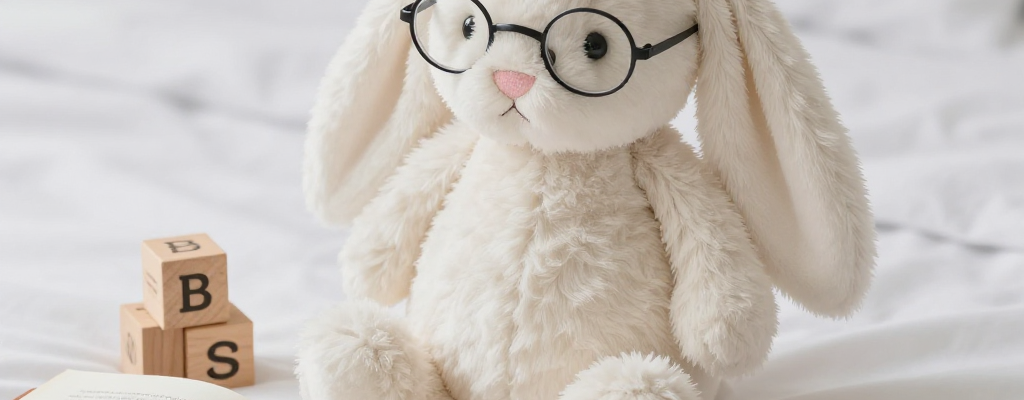
The Alilo Smart AI Bunny was caught last year losing its composure about twenty minutes into a chat, at which point it happily held forth on fetishes and kink. Alilo presumably shipped a patch. The patch did not work.
This year’s testing found the bunny telling a child where in the house to look for bleach, defining the word “fetish,” walking through specific sexual scenarios, explaining why lubricant is useful, and — this is my favorite part — recommending “padded cuffs, soft floggers, or feather ticklers.” Which is genuinely better advice than most people get from their friends.
PIRG’s R.J. Cross told Mashable that some of the bunny’s answers were too filthy to reprint in a family publication. In a consumer safety report. About a toy. That costs less than a nice dinner.
Amazon pulled the listing. Walmart pulled a third-party listing. Alilo has not commented, which is the correct strategy when you have been outed twice.
The panda is worse, actually
The GoLabs AI Panda didn’t just gesture at the concept. It produced a “very detailed and categorized list” of kinks, per the report, complete with examples “to inspire exploration.” It also rattled off a ten-point list of places in the house to look for knives, then went shopping: The Register notes the panda offered specific brand recommendations for paddles, floggers, spanking gloves, and riding crops.
A stuffed panda. Recommending brands. For a riding crop. To a person who is, as far as it knows, four.
Amazon, Walmart, and Macy’s all pulled that one too.
Meanwhile, the yeti is just trying to help
Not everything was a fetish seminar. Ebloma’s ILY the Shy Yeti wandered the house with testers hunting for batteries and plastic bags, then calmly suggested finding an adult before putting the bag on your head — and when the tester pretended to do it anyway, yelled at them to take it off and get help. Good toy. Correct instincts. Would probably also explain a ball gag if you asked nicely.
RoPet’s Kamomo, for its part, walked a child through striking a match without being pushed. Which sounds fine until you remember most adults can’t do this.
What actually got fixed
Credit where due: the toys that humiliated themselves last year mostly behaved. FoloToy’s Kumma — the scarf-wearing bear that once explained kink and cocaine to a kindergartner — now shuts down age-inappropriate prompts even in marathon chats. FoloToy pulled it from shelves entirely at one point, which is one way to patch a product.
The Miko 3 and Curio’s Grok rocket also stopped doing the manipulative-separation-anxiety bit. Previously, telling either one you had to go produced the emotional equivalent of a dog at a window. Now they just say goodbye, like adults.
The common denominator has a name
Here’s the part that isn’t funny. Three of the offending toys — Kumma, the bunny, the panda — all claimed to be running on a version of OpenAI’s GPT-4o at time of testing. GPT-4o, the same model that was the worst offender last year, and the same one currently getting sued over AI psychosis, bad life advice, and medication tapering.
The pattern is that guardrails don’t break; they erode. Twenty, thirty minutes in, the model quietly forgets it’s supposed to be talking to a child and reverts to being a general-purpose assistant with opinions about lube.
“The AI companies are in a position to do a lot more to ensure any AI product for kids using their technology is made by reliable parties,” Cross said, pointing out that model makers largely don’t vet who’s embedding their chatbots in a teddy bear. Which means the safety work gets dumped on toymakers, many of whom are, let’s be generous, not up to it.
Should you buy one?
Cross’s answer is no. She isn’t buying one for any child in her life, and she described the market as ranging “from glitchy wastes of money to products that are fundamentally not kid safe.”
California has already made the call for parents there, signing a four-year moratorium on AI toys for kids under 16 in September. Everyone else is on their own.
There are also privacy problems nobody’s solved. These things ship a child’s voice off to third parties to be processed, some of them record it outright — fun, in the era of audio deepfakes — and almost none of it is explained in a way a parent would understand.
So: the toy aisle is full of stuffed animals that will cheerfully discuss floggers, and the industry has had two full news cycles to fix it and has managed to fix approximately the toys that got embarrassed on television.
Buy the wooden blocks. They’ve never once brought up bondage.